


MAND Summer 2026 Newsletter
Dear MAND Members,
Welcome to a new year with the Maine Academy of Nutrition and Dietetics! I am excited and honored to be serving as the Maine affiliate president for the next two years.

As I step into this role, I want to begin by expressing my gratitude to the board members for their dedication over the past year; those who have completed their term, those who are new to the board, and those who have generously extended their service. I would also like to extend a special thank you to Laurie Copithorne for her commitment to MAND and for serving an unexpected two-year term as president; her leadership and dedication have been invaluable to our organization.
Like many of you, I chose this profession because I believe in the power of food and nutrition to improve lives. I am constantly inspired by the community of dietitians in Maine and the work we do in hospitals, schools, community organizations, public health programs, private practice, food banks, and countless other settings. Through my journey to becoming a dietitian, I have had the honor of working alongside so many MAND members. I look forward to expanding these relationships and establishing new relationships over the coming years.
Looking ahead, we will continue to implement the strategic goals of MAND:
1. Ensure the Organizational Sustainability and Overall Governance of MAND.
2. Meet MAND Members’ Professional Needs to Ensure Professional Growth.
3. Engage in Initiatives that Promote and Enhance the Wellbeing of Maine Citizens.
I encourage anyone interested in becoming more involved with MAND to attend an event, join a committee, mentor a student, share your expertise, or simply connect with fellow members. I look forward to serving alongside you and seeing all that we will accomplish together this year.
Wishing you a successful and fulfilling year ahead.
Denise Gaudette, RDN, LD
MAND President 2026-2028
MAND Communications Update
Communications Chair: Julie Milan
Stay in Touch Through MAND Communications
Our website is updated regularly and includes a members’ only section with our governing documents, application portals for scholarships, awards, and volunteer positions, and an incident reporting tool.
If you have nutrition news to share with other members, tap the submission button in the members section of the website to share your news in the newsletter. Email us at eatrightmaine@gmail.com if you are a member who needs the password.
Email: MAND communicates with members every two weeks through email. We occasionally send a special email blast if the news is time sensitive.
Follow us on:
Instagram at https://www.instagram.com/eatrightmaine/

Join us on all our platforms!
Food & Nutrition Security Committee
The Food and Nutrition Security Committee is composed of members with diverse backgrounds committed to making a difference for MAND members and Maine residents in areas related to food and nutrition security.
We are a fairly new committee. Our initial project was surveying MAND’s membership to learn more about your needs and practices. Since the initial survey, we have collaborated with the New Hampshire Affiliate to bring a nationally recognized expert, Clancy Harrison RD of the Food Dignity Movement, to provide our first educational opportunity. Our members collaborated and established a nutrition security resource section on the MAND website, hoping to make it easier for members and the public to find federal, state and local resources. Collaborating with the public policy panel, we track state and federal bills and assist in developing testimony.
Consider joining us as we expand our involvement. No experience is necessary — all are welcome!

Chair, Food and Nutrition Security
Committee Pat Watson
Public Policy Panel Spring Policy Update
This spring, MAND’s Public Policy Panel has continued to support several vital initiatives on behalf of MAND members, including participation in Maine’s dietetic licensure rulemaking process, continued promotion of the Dietitian Licensure Compact, and engagement with federal legislators on key healthcare priorities, including the Medical Nutrition Therapy (MNT) Act, the CONNECT for Health Act, and the Expanding Access to Diabetes Self-Management Training (DSMT) Act. Our panel is also excited to have collaborated with the Food and Nutrition Security Committee to support nutrition security-related legislation impacting individuals, families, and communities across Maine.
The Public Policy Panel has remained actively engaged in the Maine Board of Licensing of Dietetic Practice’s rulemaking process. The proposed rulemaking includes updates to licensing definitions, qualifications for dietitians and dietetic technicians, temporary licensure, advisory rulings, code of ethics, continuing education, inactive status, and reinstatement procedures. The public comment period for the proposed rulemaking closed on April 17, 2026, at 5:00 p.m. Our Public Policy Panel submitted a letter to the Board to provide feedback on behalf of MAND members. Once the rulemaking process is complete, the Public Policy Panel plans to host an educational Lunch and Learn for MAND members. This session will review major changes, explain what they mean for licensed dietitians and dietetic technicians, registered, and will provide members with an opportunity to ask questions. The session will be recorded and shared as a member benefit.
Dietitian Licensure Compact
MAND continues to support efforts to bring the Dietitian Licensure Compact to Maine. The compact would create a streamlined pathway for eligible dietitians to practice across participating states through compact privileges, while maintaining state oversight and public protection. This is especially important for dietetic professionals who provide telehealth services, work with clients across state lines, support rural communities, or relocate between states. For Maine dietitians, compact participation could reduce administrative burden and improve access to nutrition care.
At this time, Maine is navigating a procedural barrier because the compact bill was previously considered during the same biennium. Although the circumstances have changed, the bill language has not. As a result, reintroduction would likely require Legislative Council approval through the late bill process. Due to this barrier, we have been advised by the Academy’s Policy Initiatives and Advocacy (PIA) team to reintroduce the bill in the next legislative session and identify a potential sponsor early on. We will also continue to work diligently with the Department of War and Council of State Governments to ensure passage.
Federal Healthcare Initiatives
MAND has continued to engage in federal advocacy around healthcare policies that directly affect dietetic professionals and the communities they serve.
Medical Nutrition Therapy Act
Senator Susan Collins reintroduced the MNT Act on February 26, 2026. Leading up to the reintroduction, MAND members from across the state provided real-world examples of how the MNT act is essential in supporting health outcomes. This legislation would expand Medicare Part B coverage for medical nutrition therapy beyond the current limited coverage for diabetes and renal disease, creating greater access to registered dietitian nutritionists for chronic disease prevention and management. The bill is particularly relevant to dietetic professionals because it recognizes the role of RDNs in treating and managing conditions such as obesity, hypertension, dyslipidemia, malnutrition, eating disorders, cancer, gastrointestinal diseases, cardiovascular disease, and other nutrition-related conditions.
MAND also had the opportunity to recognize Senator Susan Collins in-person for these efforts with the annual 2026 Public Policy Leadership Award. Kayla and Laurie met with Senator Collins on April 8th to present the award and thank her for her continued leadership on policies such as the Medical Nutrition Therapy Act, in addition to the CONNECT for Health Act, and the DSMT Act.
Expanding Access to Diabetes Self-Management Training Act
MAND is also monitoring and supporting advocacy around the DSMT Act, co-sponsored by Senator Collins. This legislation aims to reduce barriers to diabetes self-management training for Medicare beneficiaries. Key provisions include allowing the initial 10 hours of DSMT to remain available until fully used, permitting DSMT and MNT services to be provided on the same day, reducing cost-sharing barriers, and expanding referral options. This legislation supports more coordinated diabetes care and strengthens the role of nutrition professionals in chronic disease management.
CONNECT for Health Act
The CONNECT for Health Act remains an important telehealth priority. This legislation would expand access to telehealth services under Medicare and support more permanent telehealth flexibilities. For Maine dietetic professionals, telehealth access is especially important for reaching rural communities, improving continuity of care, and reducing barriers for patients who may have transportation, mobility, or scheduling challenges. This bill currently has 73 co-sponsors, with Senator Angus King and Senator Collins signing on in April 2025.
Federal Advocacy Event
MAND’s Public Policy Coordinator, Kayla, also participated in the Academy’s Federal Advocacy Event in Washington, DC, on Thursday, April 16, 2026. This event included a breakfast briefing on Capitol Hill, review of federal policy priorities, advocacy “asks,” meeting logistics, and congressional meetings with members of Congress and congressional staff. In preparation for the event, Kayla attended several virtual trainings focused on scheduling and delegation management, Hill Day logistics, policy issues, and role practice. These training sessions were robust, leaving Kayla feeling confident to discuss the aforementioned nutrition policies with staffers of Senator Angus King and Representative Jared Golden.
Food and Nutrition Task Force Collaboration
The Public Policy Panel has also collaborated with the Food and Nutrition Security Committee to support state legislation related to nutrition security. To strengthen this work moving forward, the group discussed several best practices, including creating a centralized shared folder, maintaining a bill-tracking log, clarifying access to shared board resources, and identifying members or community partners who can help monitor legislation. These systems will help ensure timely review, testimony preparation, and coordinated communication as nutrition-related bills move through the Legislature.
LD 2040: Resolve, to Study Food Insecurity Measures in Maine
MAND and the Food and Nutrition Security Committee supported LD 2040, originally introduced as “An Act to Survey Food Insecurity in Maine.” The bill was amended to become “Resolve to, Study Food Insecurity Measures in Maine.” This legislation directs the Commissioner of Agriculture, Conservation and Forestry to study opportunities to assess and evaluate food insecurity measures in Maine and the state’s progress toward its strategic plan to end hunger by 2030. The study may include review of food insecurity disparities by age, geography, income, race, veteran status, and other factors, as well as a gap analysis to identify missing or incomplete data. LD 2040 was finally passed and signed by the Governor on March 19, 2026.
LD 2122: SNAP Access, Outreach, and Federal Funding Protections
The Public Policy Panel also prepared written testimony for LD 2122, “An Act to Prevent Negative Impacts from Federal Funding Changes to and Fund Eligibility Determinations and Outreach for the Supplemental Nutrition Assistance Program.” As amended, the bill would have required Maine DHHS to provide at least $750,000 annually, plus applicable federal matching funds, to community-based organizations for SNAP outreach. It also included an electronic error-reduction system for SNAP eligibility determinations and proposed an $87 million contingency fund to help protect SNAP benefit payments in the event of a federal funding lapse.
Although LD 2122 did not ultimately pass and died when the Legislature adjourned, the bill elevated important conversations about SNAP access, outreach capacity, nutrition security, and state preparedness in response to potential federal funding disruptions.
Stay Involved
Are you interested in joining the Public Policy Panel and staying informed about current food, nutrition, and healthcare policies? Contact us!

Public Policy Coordinator,
Kayla Gayer
House of Delegates Year in Review- Fiscal Year 2025-2026
Advancing the Profession. Strengthening Our Future

Over the past year, the House of Delegates (HOD), in close partnership with the Council on Future Practice (CFP), played a critical role in shaping the future direction of the nutrition and dietetics profession. Through environmental scanning, generative discussion, and delegate-informed insight, the HOD helped surface key forces shaping the future of our profession and the evolving role of the Academy.
Delegates identified four major drivers influencing the profession:
• Declining Public Trust
• Changing Science
• Artificial Intelligence and Learning
• Healthcare Disruption
While each of these areas presents unique challenges, delegates recognized that they are deeply interconnected and carry significant implications for how the profession is trusted, understood and valued in the future of healthcare.
From Dialogue to Strategic Insight
One of the strengths of the House this year was its ability to move beyond simply identifying challenges and instead engage in thoughtful discussion around what these drivers of change mean for practitioners, patients, educators, and the future of care delivery.
Rebuilding Trust and Strengthening Our Voice
Delegates identified declining public trust as one of the most urgent and complex issues facing healthcare and nutrition professionals today. Discussions in October 2025 emphasized the importance of:
• Transparent leadership and authentic communication
• Strengthening the visibility of RDNs and NDTRs as trusted experts
• Creating a more unified and consistent external voice for the profession.
There was strong recognition that trust is built not only through science, but through relationships, communication, and demonstrating value in the communities we serve.
Leading in Science and Evidence Communication
As nutrition science continues to evolve rapidly, often in environments shaped by misinformation and competing narratives, delegates reinforced the importance of maintaining the Academy’s leadership role as the authoritative voice in food and nutrition during their discussion in December 2025, including:
• Continued emphasis on scientific literacy and evidence interpretation
• Clear, timely, and coordinated communication strategies
• Supporting members in translating evidence into practice while reinforcing the Academy as the trusted voice in nutrition.
Modernizing Member Engagement and Resources
Delegates surfaced a critical gap between available resources and member awareness, utilization and engagement. This insight is driving a call to:
• Improve accessibility and usability of member tools
• Deliver more practical, relevant, and user-friendly resources
• Expand outward-facing communication that elevates member expertise and impact.
These conversations reinforced the importance of ensuring that members not only have access to resources, but also feel supported, connected, and equipped for the realities of modern practice.
Preparing for Healthcare Transformation
Through February 2026 discussions, delegates explored the rapidly changing healthcare landscape and its implications for the profession. Discussion centered around the continued shift toward decentralized, technology-enabled, and outcome-driven care models. Delegates highlighted the importance of:
• Demonstrating measurable value in nutrition care
• Building new competencies and leadership skills for evolving roles
• Maintaining a strong professional identity across evolving and diverse practice settings.
There was clear recognition that nutrition professionals must continue to adapt while remaining grounded in evidence, ethics, and patient-centered care.
Defining the Role of Artificial Intelligence
In April 2026, delegates examined artificial intelligence (AI) and its growing influence on healthcare, education, communication, and professional practice. Rather than viewing AI solely as a disruption, delegates explored how the profession can proactively shape its use in ways that support both practitioners and the public. Delegates highlighted the importance of:
• Strengthening AI literacy across the profession
• Preserving clinical judgment, ethics, and human connection
• Helping define responsible integration of AI into practice and education.
These discussions reinforced that the future of the profession will require both adaptability and leadership.
Informing Leadership and Driving Action
Insights generated through the House of Delegates directly informed strategic discussions at the Board of Directors level, helping ensure that member perspectives remain embedded in organizational decision-making and future planning. The work of the House this year, demonstrated the value of intentional dialogue, environmental scanning, and collaborative leadership in helping the Academy proactively navigate change rather than simply respond to it.
Looking Ahead
The conversations this year revealed a clear and consistent call to action for the profession:
• Rebuild and strengthen public trust
• Lead with clarity in science and communication
• Modernize how we engage and support members
• Elevate the profession’s voice, value, and visibility
• Define our role within a rapidly evolving healthcare and technology landscape.
The House of Delegates continues to serve as an important strategic voice for the profession, bringing forward member perspectives, identifying emerging trends, and helping shape the future direction of nutrition and dietetics.
Most importantly, this work reflects a shared commitment to ensuring that RDNs and NDTRs remain trusted and essential leaders in improving health outcomes and advancing the profession and helping shape the future of care.
Delegate,
Kristine Kittridge
MAND 2026 Conference Highlights
Another successful MAND Spring Conference! Thank you all for your attendance and feedback following the event. This year, Moving MAND Forward, hosted at the University of Maine, allowed us to hear from diverse speakers. We heard from speakers about topics such as The Academy, teaching kitchens in Maine, using spices to make healthy eating exciting, and pediatric parenteral nutrition. We were also lucky to hear from two dietitians at the forefront of food security in our state with the Nourishing Our Neighbors panel. As always, it was wonderful to see such a great turnout of members and students in one place!
Conference Chair,
Darcy Crain


MAND Awards
Each state affiliate in the Academy of Nutrition and Dietetics can nominate a member for the national categories outlined below. We congratulate our outstanding MAND members for their 2026 MAND Award!
Outstanding Dietitian of the Year: Awarded to an active RDN (in good standing) in the national, state, or district academy, not previously selected, and who has demonstrated leadership in the field. Congratulations to Melissa Page!

Emerging Dietetic Leader: Awarded to an RDN or DTR who has practiced 5-10 years, is a member in good standing in the Academy (national, state, or district) for five years and has not previously been selected. The recipient demonstrates concern for the health & nutritional status of the population and exhibits leaderships. Congratulations to Emily Lavertu!
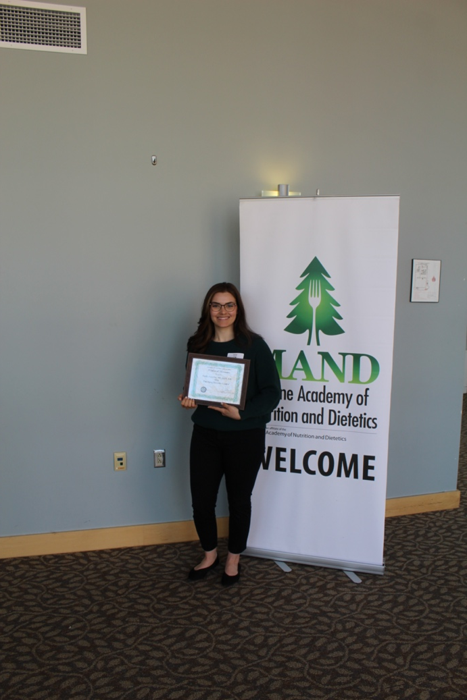
Recognized Young Dietitian of the Year: Awarded to an RDN 35 years of age or younger by May 1st, active in the national, state, or district academy (member in good standing), not previously selected, who has demonstrated concern for the promotion of optimal health and nutritional status of the population and leadership. Congratulations to Erica Magnuson!

Outstanding Dietetic Student Outstanding Dietetic Student – Awarded to students who have demonstrated academic achievement, leadership, and professional potential Outstanding Undergraduate in a didactic program in dietetics. Congratulations to Sara Mark!

What's New- The Academy

Academy Signs Coalition Letter Opposing USDA Reorganization
The Academy has joined a coalition letter led by the National Alliance for Nutrition and Activity (NANA) urging Congress to oppose USDA’s proposed reorganization of the Food and Nutrition Service (FNS). The proposal would relocate FNS staff to regional hubs across the country, raising concerns about staff retention, loss of institutional expertise, and disruptions to the administration of critical federal nutrition programs such as SNAP, WIC, and school meals.
By supporting this effort, the Academy is advocating for the stability and effectiveness of programs that help advance nutrition security for millions of Americans. We will continue to work with coalition partners and Congressional offices as appropriations discussions move forward, and additional legislative opportunities emerge.
Attending the 2026 Food & Nutrition Conference & Expo? Make it official with our new social media toolkit. It includes ready-to-use graphics and messaging for Facebook, Instagram, LinkedIn and X, so you can easily share that you’ll be there and help build excitement.
The Academy Mentorship Program reflects our commitment to you and your professional development. This six-month guided program connects mentees with experienced mentors to help students, early career professionals, and established nutrition professionals who need guidance achieve their goals and build a successful career in the field. New this year: Quality and Process Improvement Track for mentees with a project idea for quality and process improvement initiatives. Proposals are due Friday, July 31.
The Academy’s NFPE training workshop provides skills, techniques and expert guidance an RDN needs to perform an NFPE and accurately provide a nutrition diagnosis of malnutrition. Attendees benefit from receiving real-time feedback on their techniques, which increases their confidence and skill level. Adult Live Virtual NFPE Workshops will be held July 21 and 22; August 26 and 27. Pediatric Live Virtual NFPE Workshop will be held August 4 and 5. Participants of the NFPE Workshop receive 19 CPEUs upon completion.


Comments